
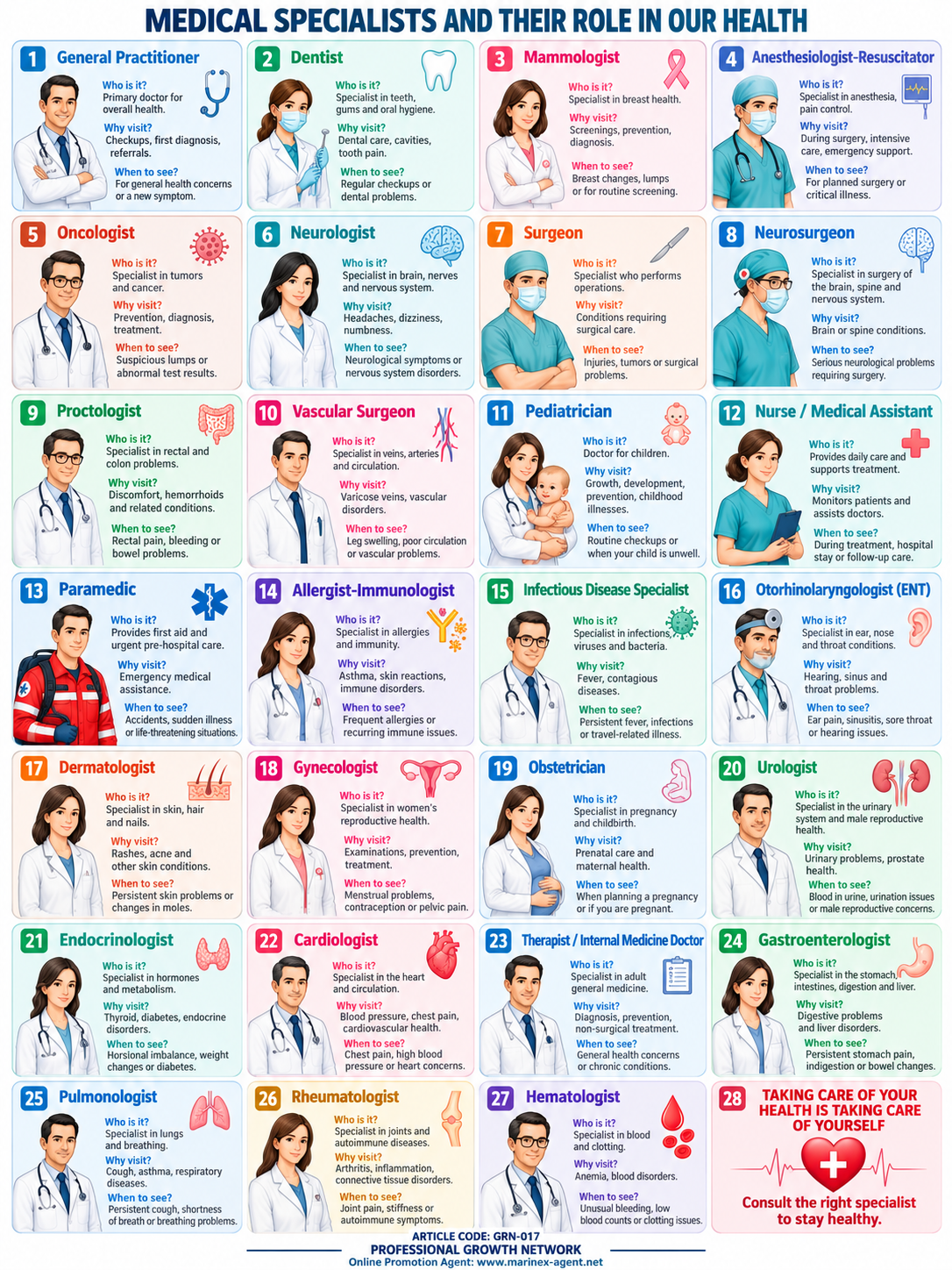
Medical Specialists and Their Role in Our Health
ARTICLE CODE: GRN-019
Category: PROFESSIONAL GROWTH NETWORK
Modern healthcare includes many different medical specialists. Each doctor focuses on a particular area of the human body, type of disease, or method of treatment.
Understanding which specialist to contact can help patients receive appropriate medical attention more quickly.
1. General Practitioner
A General Practitioner is usually the first doctor a patient contacts.
Main responsibilities include:
- General health assessment
- Initial diagnosis
- Treatment of common illnesses
- Preventive care
- Referrals to specialists
- Monitoring chronic conditions
A GP helps determine whether a patient needs additional examinations or consultation with another specialist.
2. Dentist
A Dentist specializes in the health of teeth, gums, and the mouth.
Dentists diagnose and treat:
- Tooth decay
- Gum disease
- Tooth pain
- Dental infections
- Broken or damaged teeth
- Other oral health problems
Regular dental examinations can help prevent serious problems.
3. Mammologist
A Mammologist specializes in breast health.
This specialist may deal with:
- Breast pain
- Lumps
- Changes in breast tissue
- Screening
- Benign breast diseases
- Suspicion of breast cancer
Early medical evaluation of unusual breast changes is important.
4. Anesthesiologist-Resuscitator
An Anesthesiologist-Resuscitator is responsible for anesthesia, pain control, and intensive medical support.
The specialist works during:
- Surgical procedures
- Emergency treatment
- Intensive care
- Resuscitation
- Serious medical conditions
The anesthesiologist monitors vital functions before, during, and after surgery.
5. Oncologist
An Oncologist specializes in the diagnosis and treatment of cancer.
The oncologist may:
- Investigate suspected tumors
- Interpret diagnostic tests
- Develop treatment plans
- Coordinate chemotherapy or other therapies
- Monitor treatment results
- Provide long-term follow-up
Cancer treatment often involves several specialists working together.
6. Neurologist
A Neurologist treats disorders of the brain, spinal cord, nerves, and nervous system.
Common reasons for consultation include:
- Headaches
- Dizziness
- Numbness
- Weakness
- Tremor
- Memory problems
- Nerve pain
- Neurological symptoms
Neurologists usually manage conditions that do not initially require surgery.
7. Surgeon
A Surgeon treats diseases and injuries that may require an operation.
Surgical specialists may perform procedures for:
- Injuries
- Tumors
- Infections
- Abdominal conditions
- Organ disorders
- Emergency medical situations
Modern surgery may be open, minimally invasive, or laparoscopic depending on the condition.
8. Neurosurgeon
A Neurosurgeon performs surgical treatment of diseases affecting the brain, spine, spinal cord, and peripheral nerves.
Conditions may include:
- Brain tumors
- Spinal disorders
- Traumatic injuries
- Nerve compression
- Certain vascular abnormalities
- Other conditions requiring neurological surgery
Not every neurological condition requires a neurosurgeon; many are first assessed by a neurologist.
9. Proctologist
A Proctologist specializes in diseases of the rectum, anus, and lower intestinal area.
Patients may seek consultation for:
- Hemorrhoids
- Rectal pain
- Bleeding
- Anal fissures
- Changes in bowel habits
- Other anorectal problems
Early examination can help identify both minor and serious conditions.
10. Vascular Surgeon
A Vascular Surgeon treats diseases of arteries, veins, and blood circulation.
Common problems include:
- Varicose veins
- Peripheral arterial disease
- Poor circulation
- Vascular narrowing
- Blood vessel abnormalities
- Certain circulation-related complications
Treatment may involve medication, minimally invasive procedures, or surgery.
11. Pediatrician
A Pediatrician provides medical care for infants, children, and adolescents.
The pediatrician monitors:
- Growth
- Development
- Childhood illnesses
- Vaccination
- Nutrition
- Preventive health
- Chronic pediatric conditions
Regular pediatric examinations help monitor a child’s development.
12. Nurse / Medical Assistant
A Nurse or Medical Assistant supports patients and doctors in everyday medical care.
Responsibilities may include:
- Monitoring vital signs
- Assisting during procedures
- Administering treatment
- Providing patient care
- Maintaining medical records
- Supporting recovery
- Educating patients
Nurses are an essential part of the healthcare system.
13. Paramedic
A Paramedic provides urgent pre-hospital medical care.
Paramedics respond to situations such as:
- Accidents
- Sudden illness
- Trauma
- Breathing difficulties
- Cardiac emergencies
- Life-threatening conditions
Their primary role is to stabilize the patient and arrange safe transportation to a medical facility.
14. Allergist-Immunologist
An Allergist-Immunologist specializes in allergies and immune system disorders.
Common conditions include:
- Asthma
- Food allergies
- Seasonal allergies
- Skin reactions
- Drug allergies
- Immune disorders
The specialist may perform diagnostic testing and develop long-term treatment strategies.
15. Infectious Disease Specialist
An Infectious Disease Specialist diagnoses and treats infections caused by bacteria, viruses, fungi, and parasites.
Consultation may be necessary for:
- Persistent fever
- Unusual infections
- Recurrent infections
- Severe infectious diseases
- Travel-related infections
- Complicated antibiotic treatment
These specialists often work closely with hospitals and laboratories.
16. Otorhinolaryngologist (ENT)
An Otorhinolaryngologist, commonly called an ENT doctor, specializes in diseases of the ear, nose, and throat.
Common problems include:
- Ear pain
- Hearing disorders
- Sinusitis
- Nasal obstruction
- Tonsillitis
- Sore throat
- Voice problems
- Balance disorders
Some ENT specialists also perform surgery.
17. Dermatologist
A Dermatologist specializes in diseases of the skin, hair, and nails.
Common conditions include:
- Acne
- Eczema
- Psoriasis
- Rashes
- Skin infections
- Hair loss
- Nail disorders
- Suspicious skin lesions
Dermatologists also examine moles and other skin changes.
18. Gynecologist
A Gynecologist specializes in women’s reproductive health.
Areas of care include:
- Menstrual problems
- Pelvic pain
- Reproductive system disorders
- Preventive examinations
- Hormonal concerns
- Contraception
- Menopause
Regular gynecological examinations are an important part of preventive healthcare.
19. Obstetrician
An Obstetrician specializes in pregnancy, childbirth, and care related to pregnancy.
The obstetrician monitors:
- Pregnancy development
- Maternal health
- Fetal development
- Pregnancy complications
- Labor and delivery
- Postpartum recovery
Many doctors are trained in both obstetrics and gynecology.
20. Urologist
A Urologist treats diseases of the urinary system and certain conditions affecting the male reproductive system.
Common reasons for consultation include:
- Urinary problems
- Kidney stones
- Prostate conditions
- Blood in the urine
- Urinary infections
- Male reproductive concerns
Both men and women may need urological care.
21. Endocrinologist
An Endocrinologist specializes in hormones and metabolism.
Common conditions include:
- Diabetes
- Thyroid disorders
- Hormonal imbalance
- Metabolic disorders
- Adrenal diseases
- Certain weight-related conditions
- Bone metabolism disorders
Endocrine diseases often require long-term monitoring.
22. Cardiologist
A Cardiologist specializes in the heart and cardiovascular system.
Patients may consult a cardiologist for:
- Chest pain
- High blood pressure
- Irregular heartbeat
- Shortness of breath
- Heart disease
- Circulatory problems
- Cardiovascular risk assessment
Cardiologists may use tests such as ECG, echocardiography, and blood pressure monitoring.
23. Therapist / Internal Medicine Doctor
An Internal Medicine Doctor provides general medical care for adults.
This specialist commonly manages:
- General health concerns
- Chronic diseases
- Respiratory illnesses
- Blood pressure problems
- Metabolic conditions
- Complex medical conditions involving several organs
Internal medicine doctors often coordinate treatment between different specialists.
24. Gastroenterologist
A Gastroenterologist specializes in the digestive system.
This includes:
- Stomach
- Esophagus
- Intestines
- Liver
- Gallbladder
- Pancreas
Patients may seek consultation for abdominal pain, digestive problems, reflux, bowel changes, liver disorders, or other gastrointestinal symptoms.
25. Pulmonologist
A Pulmonologist specializes in diseases of the lungs and respiratory system.
Common conditions include:
- Asthma
- Chronic cough
- Shortness of breath
- Pneumonia
- Chronic lung disease
- Breathing disorders
Pulmonologists may perform respiratory function testing and other investigations.
26. Rheumatologist
A Rheumatologist specializes in diseases affecting joints, muscles, connective tissue, and the immune system.
Common conditions include:
- Arthritis
- Autoimmune diseases
- Joint inflammation
- Chronic joint pain
- Connective tissue disorders
- Certain systemic inflammatory diseases
Many rheumatological conditions require long-term observation and treatment.
27. Hematologist
A Hematologist specializes in diseases of the blood and blood-forming organs.
Conditions may include:
- Anemia
- Abnormal blood counts
- Clotting disorders
- Platelet disorders
- Certain blood cancers
- Bone marrow diseases
The hematologist often works closely with laboratories, oncologists, and other specialists.
Conclusion
Different medical specialists have different areas of responsibility, but modern healthcare is often based on teamwork.
A patient may begin with a General Practitioner or Internal Medicine Doctor and then be referred to the appropriate specialist.
Knowing the basic role of each medical professional can make it easier to understand where to seek help and how the healthcare system is organized.
Taking care of your health means seeking appropriate professional medical advice when it is needed.
ARTICLE CODE: GRN-019
PROFESSIONAL GROWTH NETWORK
Online Promotion Agent: www.marinex-agent.net