
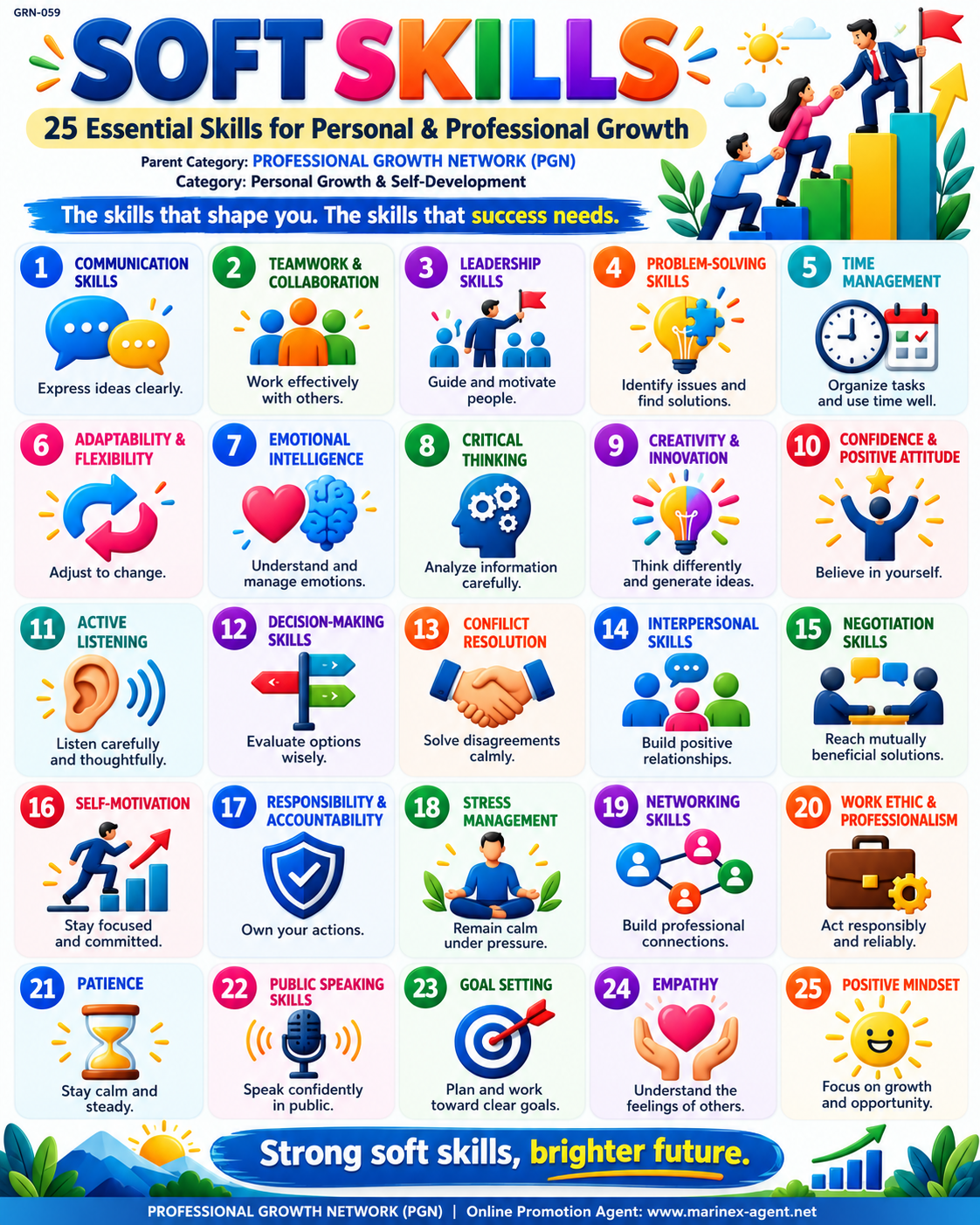
SOFT SKILLS — 25 ESSENTIAL SKILLS
FOR PERSONAL & PROFESSIONAL GROWTH
Parent Category: PROFESSIONAL GROWTH NETWORK (PGN)
Category: Personal Growth & Self-Development
Article Code: GRN-059
The Skills That Shape You. The Skills That Success Needs.
In today’s rapidly changing world, professional knowledge and technical qualifications alone are not enough to achieve long-term success.
Employers, business partners, customers, and international organizations increasingly recognize the importance of Soft Skills — personal qualities and interpersonal abilities that help individuals communicate, cooperate, solve problems, manage responsibilities, and adapt to new circumstances.
Unlike technical skills, which are often associated with specific professions, soft skills are valuable in almost every area of life.
They influence how people work with others, make decisions, handle challenges, and develop professional relationships.
This article introduces 25 essential soft skills that can support personal development, career advancement, entrepreneurship, and international business cooperation.
1. Communication Skills
Express Your Ideas Clearly and Effectively
Communication skills involve the ability to exchange information, explain ideas, ask questions, and understand other people.
Effective communication includes speaking, writing, listening, and nonverbal expression.
How to Improve:
- Practice clear and concise communication.
- Develop professional writing skills.
- Learn to explain complex ideas simply.
- Respect different opinions.
- Ask questions when clarification is needed.
Why It Matters: Strong communication helps prevent misunderstandings, improves teamwork, and supports professional relationships.
2. Teamwork & Collaboration
Work Effectively with Other People
Teamwork means cooperating with individuals who may have different skills, experiences, and responsibilities.
Successful teams combine individual strengths to achieve common objectives.
How to Improve:
- Share knowledge and useful information.
- Respect colleagues’ contributions.
- Support common goals.
- Accept constructive feedback.
- Fulfill your responsibilities.
Why It Matters: Effective teamwork improves coordination, productivity, and the quality of business results.
3. Leadership Skills
Guide, Support, and Motivate Others
Leadership is not limited to managers and company directors.
Anyone can demonstrate leadership by taking initiative, supporting colleagues, and encouraging constructive action.
How to Improve:
- Set a positive example.
- Communicate clear objectives.
- Make responsible decisions.
- Support team members.
- Recognize achievements.
Why It Matters: Effective leadership helps people work toward common goals and creates confidence within a team.
4. Problem-Solving Skills
Identify Problems and Develop Practical Solutions
Every professional activity involves challenges that require analysis and decision-making.
Problem-solving skills help individuals understand difficulties and select suitable solutions.
How to Improve:
- Clearly identify the problem.
- Collect relevant information.
- Consider several possible solutions.
- Evaluate risks and consequences.
- Implement and review the selected solution.
Why It Matters: Strong problem-solving skills reduce unnecessary losses and support effective decision-making.
5. Time Management
Organize Tasks and Use Your Time Wisely
Time management involves planning activities, establishing priorities, and completing responsibilities efficiently.
How to Improve:
- Prepare daily and weekly plans.
- Identify important tasks.
- Establish realistic deadlines.
- Reduce unnecessary distractions.
- Review progress regularly.
Why It Matters: Effective time management improves productivity and helps maintain a healthier balance between professional and personal responsibilities.
6. Adaptability & Flexibility
Adjust to Change and New Circumstances
Modern business environments change continuously due to technology, market developments, and international economic conditions.
Adaptability allows individuals to respond constructively to unfamiliar situations.
How to Improve:
- Remain open to new ideas.
- Develop additional professional skills.
- Accept changes in working procedures.
- Learn from unexpected situations.
- Consider alternative approaches.
Why It Matters: Adaptable professionals can respond more effectively to changing business requirements and opportunities.
7. Emotional Intelligence
Understand and Manage Emotions
Emotional intelligence involves recognizing personal emotions, understanding other people’s feelings, and responding appropriately to different situations.
How to Improve:
- Develop self-awareness.
- Recognize emotional reactions.
- Practice self-control.
- Demonstrate empathy.
- Respond calmly to criticism.
Why It Matters: Emotional intelligence supports effective communication, cooperation, and conflict management.
8. Critical Thinking
Analyze Information Before Making Decisions
Critical thinking is the ability to evaluate information logically and distinguish reliable evidence from assumptions or unsupported claims.
How to Improve:
- Ask relevant questions.
- Compare different information sources.
- Identify possible inaccuracies.
- Examine assumptions.
- Consider alternative explanations.
Why It Matters: Critical thinking helps individuals avoid poor decisions and recognize potential business risks.
9. Creativity & Innovation
Develop New Ideas and Better Solutions
Creativity involves generating original ideas, while innovation focuses on applying useful ideas to improve products, services, or processes.
How to Improve:
- Explore different perspectives.
- Study successful business examples.
- Experiment with new approaches.
- Encourage constructive discussions.
- Combine existing knowledge in new ways.
Why It Matters: Creativity and innovation can help businesses improve efficiency, develop new services, and identify market opportunities.
10. Confidence & Positive Attitude
Believe in Your Ability to Learn and Improve
Confidence helps individuals communicate, accept responsibilities, and approach new challenges.
A positive attitude encourages constructive behavior without ignoring real problems or risks.
How to Improve:
- Prepare carefully for important activities.
- Recognize personal achievements.
- Continue developing professional knowledge.
- Accept reasonable challenges.
- Maintain realistic expectations.
Why It Matters: Healthy confidence supports professional development, communication, and personal growth.
11. Active Listening
Listen Carefully and Thoughtfully
Active listening means giving full attention to another person and making a genuine effort to understand their message.
How to Improve:
- Avoid unnecessary interruptions.
- Maintain attention during conversations.
- Ask clarifying questions.
- Summarize important points.
- Respect different viewpoints.
Why It Matters: Active listening improves communication and helps build trust in personal and professional relationships.
12. Decision-Making Skills
Evaluate Options and Choose Wisely
Decision-making involves selecting an appropriate course of action after considering available information, risks, and objectives.
How to Improve:
- Define the decision clearly.
- Gather reliable information.
- Compare available alternatives.
- Assess possible consequences.
- Review results after implementation.
Why It Matters: Good decision-making reduces unnecessary risks and helps individuals achieve their objectives.
13. Conflict Resolution
Resolve Disagreements Constructively
Conflicts can arise from misunderstandings, different priorities, or competing interests.
Conflict resolution skills help people address disagreements while maintaining respect and professionalism.
How to Improve:
- Remain calm during difficult discussions.
- Listen to all involved parties.
- Identify the underlying problem.
- Focus on solutions rather than personal criticism.
- Seek mutually acceptable agreements.
Why It Matters: Effective conflict resolution protects relationships and supports productive cooperation.
14. Interpersonal Skills
Build Positive Professional and Personal Relationships
Interpersonal skills influence how people interact, communicate, and cooperate with others.
They are especially important in customer service, management, consulting, and international business.
How to Improve:
- Show respect and courtesy.
- Communicate honestly.
- Recognize cultural differences.
- Demonstrate reliability.
- Maintain professional relationships.
Why It Matters: Strong interpersonal skills support trust, cooperation, and long-term business connections.
15. Negotiation Skills
Reach Mutually Beneficial Agreements
Negotiation involves discussions between parties seeking to agree on commercial, professional, or personal matters.
How to Improve:
- Prepare objectives in advance.
- Understand the interests of the other party.
- Listen carefully.
- Consider alternative solutions.
- Confirm important agreements in writing.
Why It Matters: Effective negotiation supports successful business transactions, partnerships, and professional relationships.
16. Self-Motivation
Stay Focused and Committed
Self-motivation is the ability to maintain effort toward personal and professional objectives without relying entirely on external encouragement.
How to Improve:
- Establish meaningful goals.
- Divide large tasks into smaller steps.
- Recognize progress.
- Develop consistent habits.
- Remember the purpose of your activities.
Why It Matters: Self-motivation supports independent learning, entrepreneurship, and long-term professional development.
17. Responsibility & Accountability
Take Ownership of Your Actions
Responsible individuals understand their obligations and accept accountability for their decisions and results.
How to Improve:
- Fulfill commitments.
- Meet agreed deadlines.
- Admit mistakes.
- Correct problems when possible.
- Communicate honestly about progress.
Why It Matters: Responsibility and accountability strengthen professional credibility and customer confidence.
18. Stress Management
Maintain Balance During Difficult Situations
Stress management involves recognizing pressure and using appropriate strategies to maintain well-being and performance.
How to Improve:
- Organize workloads realistically.
- Take regular breaks.
- Maintain healthy daily routines.
- Practice relaxation techniques.
- Seek appropriate support when needed.
Why It Matters: Effective stress management supports clearer thinking, healthier relationships, and sustainable productivity.
19. Networking Skills
Build Meaningful Professional Connections
Networking involves developing and maintaining relationships with people who share professional interests or can exchange useful knowledge and opportunities.
How to Improve:
- Join professional communities.
- Participate in relevant discussions.
- Share useful information.
- Maintain contact with business partners.
- Develop international connections.
Why It Matters: Professional networking can create opportunities for cooperation, learning, employment, and business development.
20. Work Ethic & Professionalism
Act Responsibly and Reliably
Professionalism involves maintaining appropriate standards of behavior, communication, integrity, and responsibility.
How to Improve:
- Respect deadlines.
- Maintain confidentiality.
- Communicate professionally.
- Deliver quality work.
- Follow ethical principles.
Why It Matters: A strong work ethic helps build trust, professional reputation, and long-term business relationships.
21. Patience
Remain Calm and Consistent
Patience helps people manage delays, challenges, and situations where results require time.
How to Improve:
- Maintain realistic expectations.
- Avoid unnecessary emotional reactions.
- Focus on long-term goals.
- Accept that progress takes time.
- Practice consistent effort.
Why It Matters: Patience is especially valuable in education, business negotiations, entrepreneurship, and professional development.
22. Public Speaking Skills
Communicate Confidently with an Audience
Public speaking involves presenting information, explaining ideas, and communicating effectively with groups of people.
How to Improve:
- Prepare a clear presentation structure.
- Practice speaking regularly.
- Use understandable language.
- Maintain appropriate eye contact.
- Encourage audience engagement.
Why It Matters: Public speaking improves professional visibility and supports leadership, education, sales, and business presentations.
23. Goal Setting
Plan and Work Toward Clear Objectives
Goal setting helps individuals transform ideas and ambitions into practical actions.
How to Improve:
- Define specific objectives.
- Establish realistic deadlines.
- Identify necessary resources.
- Monitor progress.
- Adjust plans when circumstances change.
Why It Matters: Clear goals improve focus, motivation, and the ability to measure progress.
24. Empathy
Understand the Feelings and Perspectives of Others
Empathy is the ability to recognize and understand the emotional experiences and perspectives of other people.
How to Improve:
- Listen without immediately judging.
- Consider different viewpoints.
- Respect personal experiences.
- Demonstrate kindness.
- Respond thoughtfully to difficult situations.
Why It Matters: Empathy strengthens relationships and contributes to effective teamwork, management, and customer communication.
25. Positive Mindset
Focus on Growth and Opportunities
A positive mindset encourages individuals to approach challenges constructively while remaining realistic about difficulties.
How to Improve:
- Focus on practical solutions.
- Recognize learning opportunities.
- Maintain constructive habits.
- Learn from mistakes.
- Celebrate meaningful progress.
Why It Matters: A constructive mindset supports resilience, continuous learning, and professional development.
26. How to Develop Soft Skills in Everyday Life
Soft skills are developed through practice, feedback, observation, and real-life experience.
A Practical Development Plan:
Step 1 — Identify Your Strengths
Consider which skills you already use effectively.
Step 2 — Identify Areas for Improvement
Choose several skills that could improve your personal or professional performance.
Step 3 — Practice Regularly
Apply these skills during conversations, teamwork, business activities, and daily responsibilities.
Step 4 — Request Constructive Feedback
Ask trusted colleagues, teachers, or professional partners to evaluate your progress.
Step 5 — Continue Learning
Use educational materials, training courses, practical exercises, and professional experience to improve.
Key Principle:
Soft Skills Improve Through Consistent Practice and Real Experience.
27. Soft Skills in International Business
Soft skills are especially valuable in international business environments, where people cooperate across different countries, languages, and cultures.
Successful international business communication requires:
- Clear professional correspondence.
- Cultural awareness.
- Negotiation skills.
- Active listening.
- Reliability.
- Conflict resolution.
- Adaptability.
- Long-term relationship management.
For entrepreneurs, agents, brokers, consultants, and service providers, these abilities can be just as important as technical knowledge.
Business Principle:
Professional Knowledge Opens Opportunities. Soft Skills Help Develop Relationships and Achieve Results.
28. Professional Growth Network — Developing Human Potential
The Professional Growth Network (PGN) promotes knowledge sharing, personal growth, professional development, and international business cooperation.
Our community encourages individuals to develop both technical expertise and essential soft skills.
Through Marinex-Agent, we also promote the concept of a Personal Online Promotion Agent, helping professionals and entrepreneurs establish their own online business presence.
Our Main Principle:
First, Promote Yourself. Then, Promote Your Products or Services.
However, successful personal promotion requires more than an attractive website or professional presentation.
It also requires communication skills, reliability, confidence, professional ethics, and the ability to build meaningful relationships.
Knowledge • Connections • Opportunities • Growth
Conclusion
Soft skills are essential for personal development, professional success, and effective cooperation with other people.
Communication, teamwork, leadership, critical thinking, emotional intelligence, responsibility, and adaptability influence how individuals respond to opportunities and challenges.
Unlike qualifications obtained through formal education, soft skills continue developing throughout life.
The most effective approach is to combine professional knowledge with strong interpersonal abilities, practical experience, and continuous learning.
STRONG SOFT SKILLS — BRIGHTER FUTURE!
LEARN • PRACTICE • APPLY • GROW
PROFESSIONAL GROWTH NETWORK (PGN)
Online Promotion Agent: www.marinex-agent.net
Article Code: GRN-059