
6 Food Combinations to Consider Carefully
ARTICLE CODE: GRN-006
Food combinations can influence digestion, nutrient absorption and the way we feel after a meal. Some popular claims about “bad food combinations” are overstated, but several combinations deserve attention for nutritional or health reasons.
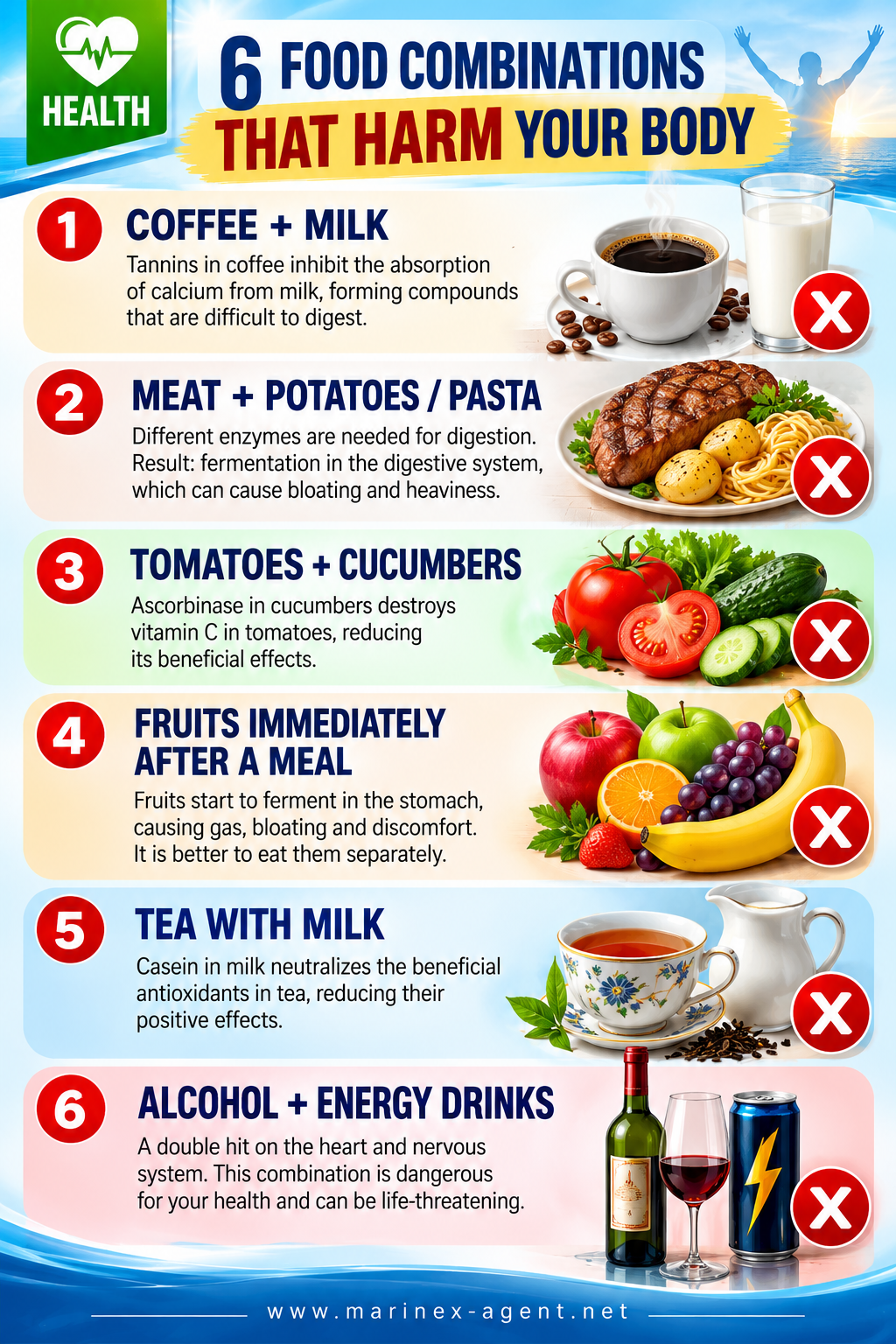
1. Coffee + Milk
Coffee contains natural compounds such as tannins and polyphenols, while milk provides calcium and protein. Adding milk to coffee is generally considered safe for most people, and it does not make coffee inherently unhealthy.
However, coffee and other caffeinated beverages can influence the absorption of certain nutrients, particularly iron, when consumed together with meals. People who need to maximize mineral absorption may therefore prefer to separate coffee from iron-rich meals.
For most healthy adults, moderate coffee with milk can still be part of a balanced diet.
2. Meat + Potatoes / Pasta
Meat combined with potatoes or pasta is a traditional meal in many countries. There is no general scientific rule saying that the human digestive system cannot digest proteins and carbohydrates together.
Nevertheless, a large serving containing fatty meat together with substantial amounts of potatoes, pasta or rich sauces can be high in calories and difficult to digest for some people, potentially contributing to heaviness or discomfort.
A more balanced plate can include moderate portions of meat and carbohydrates together with plenty of vegetables.
3. Tomatoes + Cucumbers
Tomatoes and cucumbers are commonly eaten together in salads. Claims that this combination is dangerous or that cucumbers completely “destroy” the vitamin C in tomatoes are misleading.
Both vegetables can be valuable parts of a healthy diet. Tomatoes provide vitamin C, potassium and beneficial plant compounds such as lycopene, while cucumbers provide water and other nutrients.
There is normally no health reason to avoid eating tomatoes and cucumbers together.
4. Fruits Immediately After a Meal
Fruit provides vitamins, minerals, fibre and many beneficial plant compounds. The widespread claim that fruit eaten after a meal simply “ferments in the stomach” is an oversimplification.
However, some people may experience bloating, fullness or digestive discomfort after eating a large meal followed immediately by a substantial quantity of fruit.
For such individuals, eating fruit separately as a snack between meals may feel more comfortable. The appropriate timing ultimately depends on individual digestion and dietary habits.
5. Tea + Milk
Tea contains beneficial plant compounds, including polyphenols and flavonoids. Milk contains proteins, calcium and other nutrients.
Adding milk to tea does not automatically eliminate all of tea’s beneficial properties. Research into interactions between milk proteins and tea polyphenols has produced varying results, and the nutritional effect is more complex than simply saying that milk “neutralizes” tea antioxidants.
Therefore, drinking tea with milk is generally acceptable. People who prefer tea without milk can, of course, enjoy it that way as well.
6. Alcohol + Energy Drinks
This combination deserves considerably more caution than the food combinations above.
Energy drinks commonly contain significant amounts of caffeine and other stimulants. Caffeine does not cancel the effects of alcohol. Instead, stimulation may make a person feel more alert while alcohol-related impairment remains.
This can contribute to greater alcohol consumption, impaired judgment, dehydration, increased heart rate and other potentially dangerous effects.
For health and safety reasons, mixing alcohol with energy drinks should be avoided.
Conclusion
Not every popular claim about “incompatible foods” is supported by strong scientific evidence. The human digestive system is designed to process mixed meals containing proteins, carbohydrates and fats.
The most useful approach is therefore not to fear ordinary food combinations, but to focus on moderation, balanced nutrition, portion size and individual tolerance.
At the same time, some combinations—particularly alcohol and highly caffeinated energy drinks—involve genuine health concerns and deserve special caution.
Good nutrition is not only about what we eat, but also about balance, moderation and informed choices.