
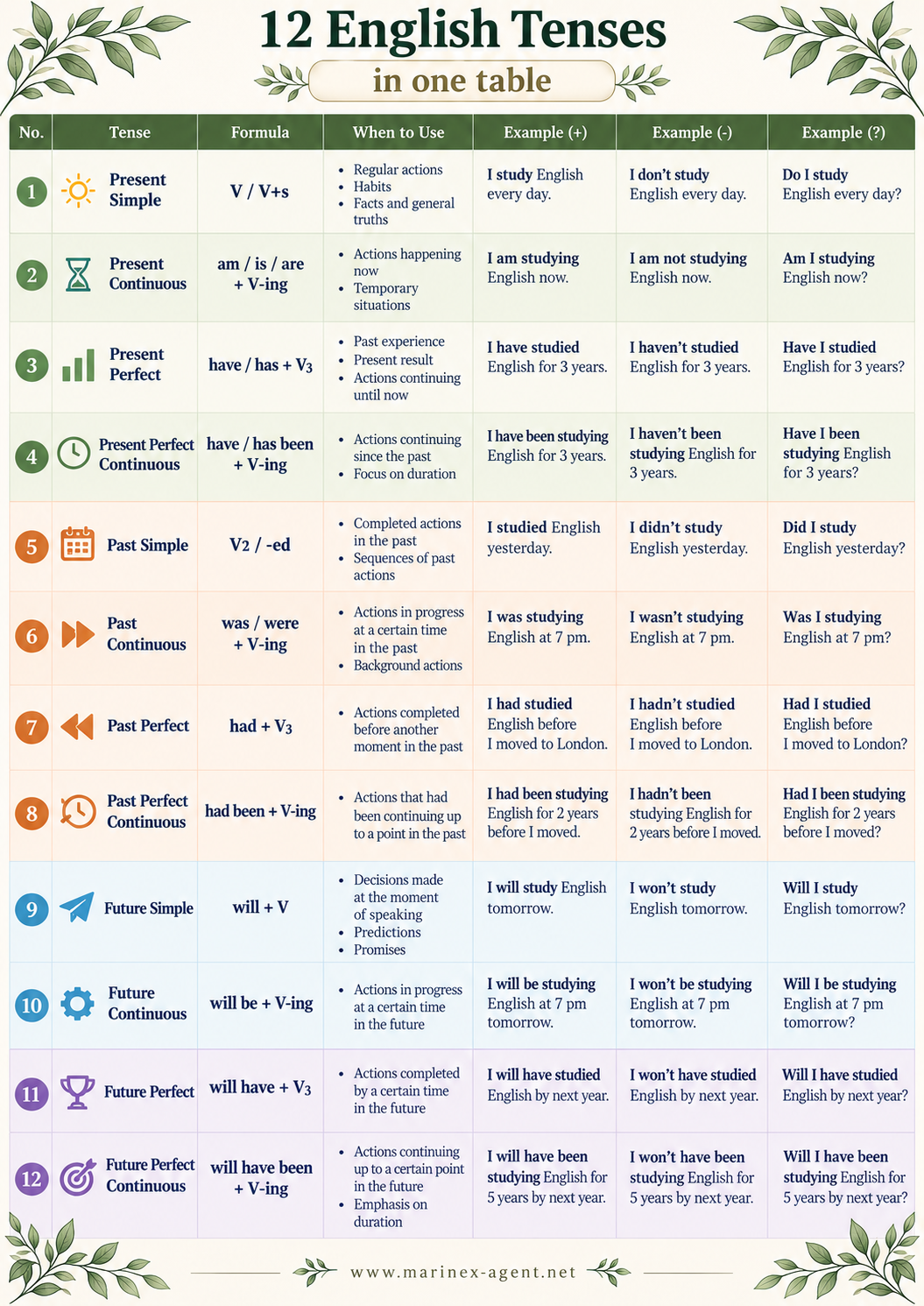
12 English Tenses — Simple and Clear Guide
REF NO: GRN-005
English tenses help us understand when an action happens: now, in the past, or in the future. Each tense has its own job. Think of them as 12 different “time boxes.”
1. Present Simple
We use the Present Simple for things that happen regularly, things that are always true, and habits.
Formula:
I / You / We / They + verb
He / She / It + verb + s
Examples:
- I study English every day.
- She works in an office.
- The sun rises in the east.
Think of it like this: “This is what usually happens.”
Use it for:
- habits;
- routines;
- facts;
- repeated actions.
Negative:
I do not study every day.
She does not work here.
Question:
Do you study English?
Does she work here?
2. Present Continuous
We use the Present Continuous when something is happening right now.
Formula:
am / is / are + verb-ing
Examples:
- I am studying English now.
- She is talking on the phone.
- They are working.
Think of it like this: “Look! It is happening now.”
Use it for:
- actions happening now;
- temporary situations;
- actions happening around this moment.
Negative:
I am not studying now.
Question:
Are you studying now?
3. Present Perfect
We use the Present Perfect when something happened before now, but the result is important now.
Formula:
have / has + V3
Examples:
- I have finished my work.
- She has visited London.
- We have studied English for three years.
Think of it like this: “It happened before, and it matters now.”
Use it for:
- life experience;
- recent results;
- actions that started before and are still important now.
Negative:
I have not finished my work.
Question:
Have you finished your work?
4. Present Perfect Continuous
We use the Present Perfect Continuous when an action started in the past and is still continuing now.
Formula:
have / has been + verb-ing
Examples:
- I have been studying English for three years.
- She has been working since morning.
- They have been waiting for an hour.
Think of it like this: “It started before and is still going on.”
This tense is often about duration.
Use it for:
- long actions;
- actions continuing until now;
- emphasizing how long something has been happening.
Negative:
I have not been studying for long.
Question:
Have you been studying for three years?
5. Past Simple
We use the Past Simple for actions that started and finished in the past.
Formula:
verb + ed
or irregular form: V2
Examples:
- I studied English yesterday.
- She went to London.
- We finished the meeting.
Think of it like this: “It happened, and it is finished.”
Use it for:
- finished past actions;
- events at a specific past time;
- sequences of actions.
Negative:
I did not study yesterday.
Question:
Did you study yesterday?
6. Past Continuous
We use the Past Continuous when an action was happening at a specific moment in the past.
Formula:
was / were + verb-ing
Examples:
- I was studying at 7 p.m.
- She was sleeping when I called.
- They were working all evening.
Think of it like this: “At that moment, the action was in progress.”
Use it for:
- background actions;
- actions happening at a particular past time;
- one action interrupted by another.
Negative:
I was not studying at 7 p.m.
Question:
Were you studying at 7 p.m.?
7. Past Perfect
We use the Past Perfect when one action happened before another past action.
Formula:
had + V3
Examples:
- I had finished my work before he arrived.
- She had left before the meeting started.
- We had studied English before we moved abroad.
Think of it like this: “This happened first, then another past event happened.”
Use it to show the order of two past actions.
Negative:
I had not finished before he arrived.
Question:
Had you finished before he arrived?
8. Past Perfect Continuous
We use the Past Perfect Continuous when an action had been continuing for some time before another past moment.
Formula:
had been + verb-ing
Examples:
- I had been studying for two hours before dinner.
- She had been working all day before she went home.
- They had been waiting for an hour before the bus arrived.
Think of it like this: “The action continued for some time before another past event.”
Use it when duration is important.
Negative:
I had not been studying for long.
Question:
Had you been studying before dinner?
9. Future Simple
We use the Future Simple for decisions, promises, predictions, and future actions.
Formula:
will + verb
Examples:
- I will study English tomorrow.
- She will call you later.
- We will help you.
Think of it like this: “This will happen later.”
Use it for:
- quick decisions;
- promises;
- predictions;
- future facts.
Negative:
I will not study tomorrow.
Question:
Will you study tomorrow?
10. Future Continuous
We use the Future Continuous when an action will be happening at a specific time in the future.
Formula:
will be + verb-ing
Examples:
- I will be studying at 7 p.m. tomorrow.
- She will be working in the morning.
- They will be travelling next week.
Think of it like this: “At that future time, the action will be in progress.”
Use it for:
- actions in progress in the future;
- future situations at a specific time.
Negative:
I will not be studying at 7 p.m.
Question:
Will you be studying at 7 p.m.?
11. Future Perfect
We use the Future Perfect when an action will be completed before a certain future time.
Formula:
will have + V3
Examples:
- I will have finished my work by 6 p.m.
- She will have arrived by tomorrow.
- We will have studied this topic by next week.
Think of it like this: “It will already be finished by that future time.”
Use it when completion is important.
Negative:
I will not have finished by 6 p.m.
Question:
Will you have finished by 6 p.m.?
12. Future Perfect Continuous
We use the Future Perfect Continuous when an action will continue for a period of time up to a future moment.
Formula:
will have been + verb-ing
Examples:
- I will have been studying English for five years by next year.
- She will have been working here for ten years by June.
- They will have been travelling for two weeks by Friday.
Think of it like this: “By that future time, this action will have continued for this long.”
Use it when you want to show:
- duration;
- a long continuing future action;
- how long something will have been happening.
Negative:
I will not have been studying for five years by then.
Question:
Will you have been studying for five years by next year?
Very Simple Memory Rule
- Simple = fact or completed action.
- Continuous = action in progress.
- Perfect = result or action completed before another time.
- Perfect Continuous = duration of an action.
And:
- Present = now.
- Past = before now.
- Future = later.
So the whole system becomes much easier:
Present + Past + Future multiplied by Simple + Continuous + Perfect + Perfect Continuous
= 12 English Tenses.