
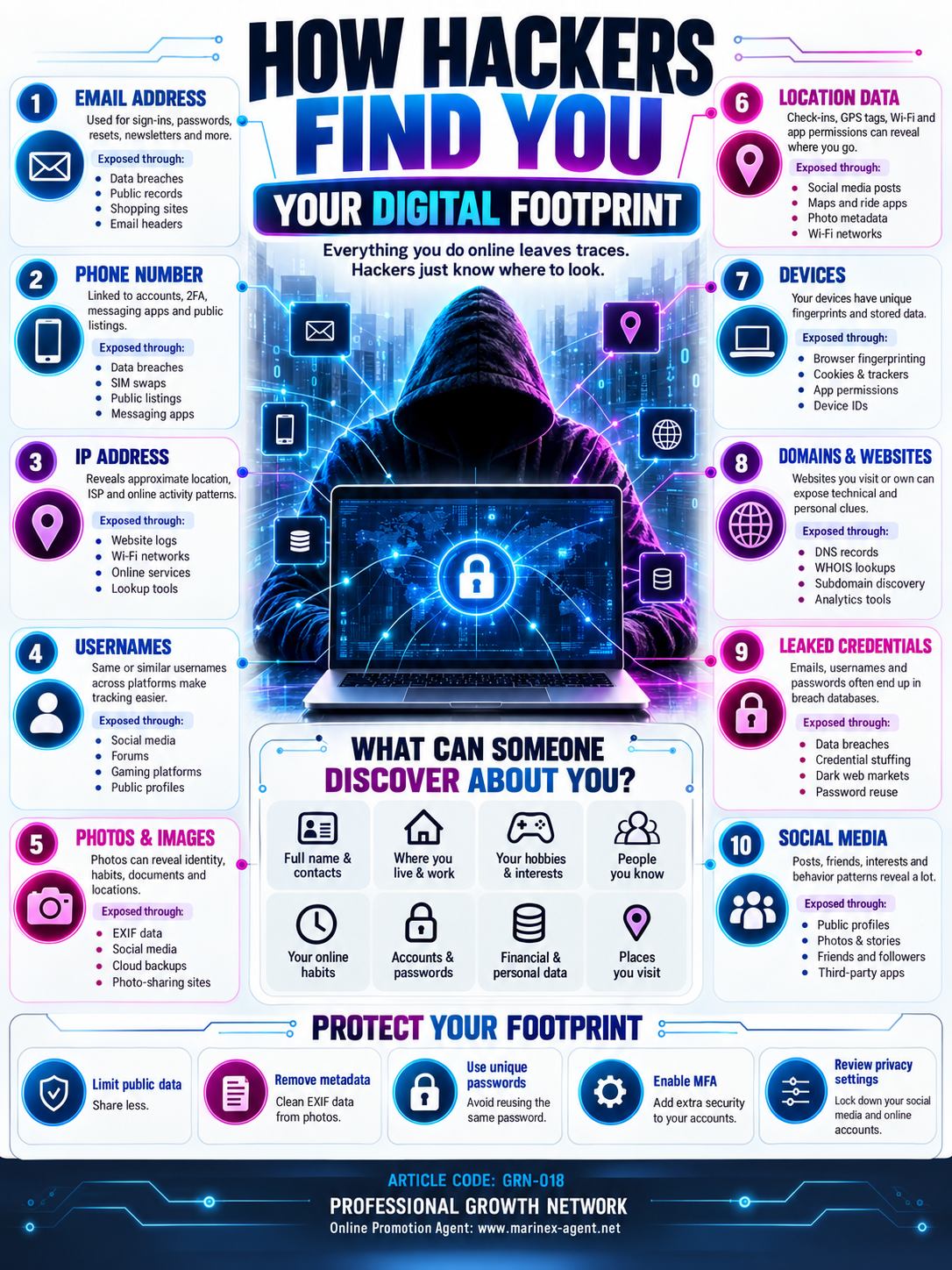
How Hackers Find You — Your Digital Footprint
ARTICLE CODE: GRN-018
Category: PROFESSIONAL GROWTH NETWORK
Every activity on the Internet can leave a digital trace. Email addresses, phone numbers, usernames, photos, devices, websites, and social media activity may reveal more information than many users realize.
Cybercriminals often collect information from many small sources and combine it into a much more complete profile.
1. Email Address
An email address is one of the most common digital identifiers.
It is often connected with:
- Online accounts
- Password resets
- Newsletters
- Shopping websites
- Business communication
- Social media
- Cloud services
Email addresses may become exposed through:
- Data breaches
- Public records
- Online directories
- Website registrations
- Email headers
A single exposed email address can sometimes help attackers identify other accounts connected to the same person.
2. Phone Number
A phone number is frequently linked to many online services.
It may be used for:
- Account registration
- Two-factor authentication
- Messaging applications
- Banking notifications
- Password recovery
- Public business listings
Phone numbers can become exposed through:
- Data breaches
- Public directories
- Social media profiles
- Messaging applications
- SIM-related fraud
Users should avoid publishing their personal number unnecessarily.
3. IP Address
An IP address identifies an Internet connection.
It may reveal:
- Approximate geographic location
- Internet service provider
- Connection type
- General online activity patterns
IP addresses may appear in:
- Website logs
- Online services
- Wi-Fi networks
- Server records
- Diagnostic tools
An IP address does not normally reveal an exact home address by itself, but it can provide useful technical and location-related information.
4. Usernames
Many people reuse the same or similar username across multiple websites.
This can make it easier to connect different online profiles.
Usernames may appear on:
- Social media
- Forums
- Gaming platforms
- Business websites
- Public profiles
- Comment sections
Using the same username everywhere may allow someone to build a broader picture of your online activity.
5. Photos and Images
Digital images can contain much more information than what is visible in the picture.
Photos may reveal:
- Identity
- Location
- Workplace
- Home surroundings
- Documents
- Travel habits
- Family members
- Daily routines
Some images may also contain metadata such as:
- Date and time
- Device information
- GPS location
- Camera details
Before publishing sensitive images, it is useful to review what information they contain.
6. Location Data
Location information can reveal where a person lives, works, travels, or spends time.
Location may become visible through:
- Social media check-ins
- GPS tags
- Map applications
- Ride-hailing apps
- Photo metadata
- Wi-Fi networks
- Mobile app permissions
Repeated location information can reveal patterns such as daily routes, workplaces, or frequently visited places.
7. Devices
Every computer, smartphone, tablet, or other connected device can create a technical fingerprint.
Devices may reveal information through:
- Browser fingerprinting
- Cookies
- Tracking technologies
- Device IDs
- App permissions
- Operating system information
- Screen settings
- Installed software
This information may be used to recognize the same device across different online sessions.
8. Domains and Websites
Websites can also reveal technical and organizational information.
A domain or website may expose:
- Hosting provider
- DNS records
- Subdomains
- Server information
- Public contact details
- Website technologies
- Analytics systems
Information may be collected through:
- WHOIS records
- DNS lookup services
- Search engines
- Website analysis tools
- Public archives
Website owners should regularly review which technical information is publicly available.
9. Leaked Credentials
One of the most serious risks is exposure of usernames and passwords through data breaches.
Leaked credentials may include:
- Email addresses
- Usernames
- Passwords
- Telephone numbers
- Security information
Attackers may attempt to reuse stolen credentials on other websites.
This is known as credential stuffing.
The risk becomes much greater when the same password is used for several different accounts.
For this reason, every important account should have a unique password.
10. Social Media
Social media can provide a large amount of personal information.
Public profiles may reveal:
- Full name
- Friends and relatives
- Employer
- Location
- Interests
- Travel
- Photos
- Daily habits
- Professional contacts
- Personal opinions
Even separate pieces of harmless information can become valuable when combined.
Users should regularly review:
- Privacy settings
- Public posts
- Friends lists
- Tagged photos
- Third-party applications
- Location sharing
Conclusion
A digital footprint is created gradually through everyday online activity.
Someone collecting enough information may potentially discover:
- Your identity
- Contact details
- Where you live or work
- Your interests
- Your online habits
- People you know
- Accounts you use
- Places you visit
- Personal or financial information
The best protection is not complete silence online, but careful digital hygiene.
Useful measures include:
- Share less personal information publicly
- Use unique passwords
- Enable Multi-Factor Authentication
- Review privacy settings
- Remove unnecessary photo metadata
- Avoid reusing usernames where privacy matters
- Check whether your email has appeared in known data breaches
- Keep devices and software updated
- Be cautious with links, attachments, and unknown messages
Privacy is easier to protect before information becomes public than after it has already spread online.
ARTICLE CODE: GRN-018
PROFESSIONAL GROWTH NETWORK
Online Promotion Agent: www.marinex-agent.net