
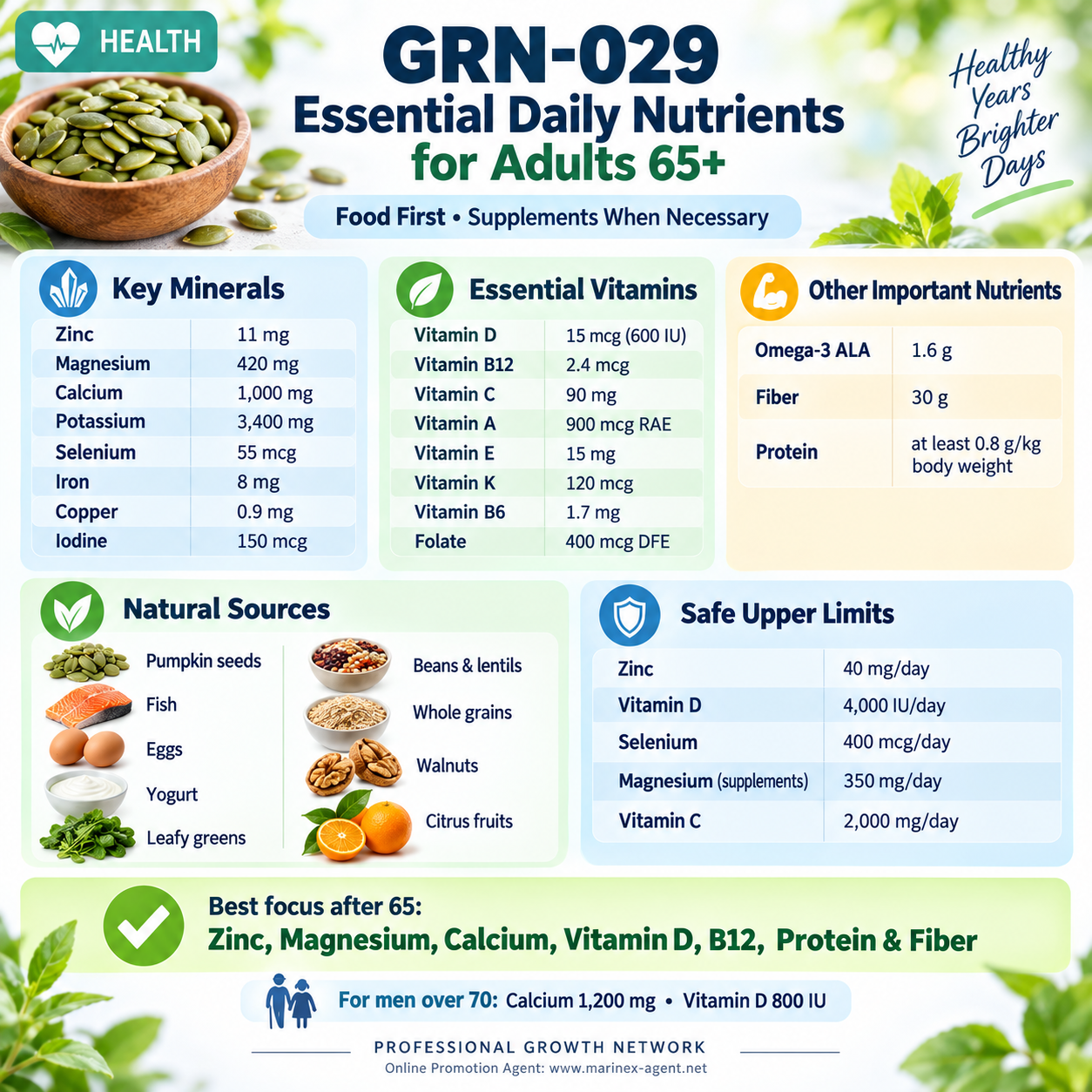
Essential Vitamins, Minerals, and Nutrients for Healthy Aging: Daily Requirements
for Adults Over 65
PROFESSIONAL GROWTH NETWORK
Health, Nutrition & Active Longevity | 2026–2027
Introduction
Healthy aging depends on a balanced diet, regular physical activity, sufficient sleep, and adequate intake of essential nutrients.
As people grow older, maintaining healthy bones, muscles, cardiovascular function, immunity, and cognitive performance becomes increasingly important.
Vitamins, minerals, and other nutrients contribute to these functions. However, taking more supplements does not necessarily produce better health.
This article presents practical daily nutritional requirements for men aged 65–70, with particular attention to zinc, magnesium, vitamin D, vitamin B12, omega-3 fatty acids, and natural food sources.
Important: The daily values below represent total nutrient intake from food and supplements combined. They are not recommended supplement dosages.
1. Essential Minerals and Trace Elements
Minerals support the cardiovascular system, nervous system, muscular activity, bone strength, and numerous metabolic processes.
| Mineral | Daily Requirement | Main Benefits |
|---|---|---|
| Zinc | 11 mg | Immune function, skin health, wound healing |
| Magnesium | 420 mg | Muscles, nerves, heart function |
| Calcium | 1,000 mg | Bone strength, muscle contraction |
| Potassium | 3,400 mg | Blood pressure regulation, muscle function |
| Selenium | 55 mcg | Thyroid function, antioxidant enzymes |
| Iron | 8 mg | Hemoglobin production, oxygen transport |
| Copper | 0.9 mg | Blood cell formation, nervous system |
| Iodine | 150 mcg | Thyroid hormone production |
Special considerations:
- After age 70, the recommended calcium intake for men increases to 1,200 mg daily.
- Potassium supplements require particular caution in people with kidney disease or those taking certain blood pressure medications.
- Iron supplements should generally be taken only when medically indicated.
2. Essential Vitamins for Adults Over 65
Vitamins participate in immune protection, metabolism, nerve function, cellular repair, and bone maintenance.
| Vitamin | Daily Requirement | Main Function |
|---|---|---|
| Vitamin D | 15 mcg (600 IU) | Bone and muscle health |
| Vitamin B12 | 2.4 mcg | Nervous system, red blood cells |
| Vitamin C | 90 mg | Collagen formation, immune function |
| Vitamin A | 900 mcg RAE | Vision, immunity, skin |
| Vitamin E | 15 mg | Antioxidant protection |
| Vitamin K | 120 mcg | Blood clotting, bone metabolism |
| Vitamin B1 | 1.2 mg | Energy metabolism, nerves |
| Vitamin B2 | 1.3 mg | Cellular energy production |
| Vitamin B3 | 16 mg NE | Metabolism |
| Vitamin B6 | 1.7 mg | Nervous system, protein metabolism |
| Folate (B9) | 400 mcg DFE | Cell division, blood formation |
Important considerations:
Vitamin D requirements increase to 20 mcg (800 IU) per day after age 70.
Vitamin B12 absorption may decrease with age, particularly in people with certain gastrointestinal conditions or those taking medications that reduce stomach acid.
Vitamin K intake should remain consistent for people taking warfarin, under medical guidance.
3. Zinc: Natural Food Sources Versus Supplements
Zinc is an essential trace mineral involved in hundreds of enzymatic processes.
It contributes to:
- Immune system function.
- Wound healing.
- Protein synthesis.
- Maintenance of normal skin.
- Taste and smell.
- Normal cell division.
Daily requirement for older adult men: 11 mg.
Pumpkin seeds are a useful natural source of zinc.
| Pumpkin Seeds | Approximate Zinc Content |
|---|---|
| 20 g | 1.5 mg |
| 30 g | 2.3 mg |
| 50 g | 3.8 mg |
| 100 g | 7.5 mg |
These values are approximate and vary according to the product.
A daily serving of 30–50 g of unsalted pumpkin seeds can make a valuable contribution to zinc intake.
However, zinc from plant foods may be absorbed less efficiently because phytates naturally present in seeds and grains can reduce mineral absorption.
Can pumpkin seeds replace Zinc 50 mg supplements?
Pumpkin seeds can help meet ordinary nutritional needs, but they are not a dose-for-dose substitute for medically prescribed zinc treatment.
A 50 mg zinc supplement exceeds the adult tolerable upper intake level of 40 mg per day.
Long-term excessive zinc consumption may interfere with copper absorption and cause copper deficiency.
For this reason, high-dose zinc supplementation should be used only when medically justified and professionally supervised.
4. Omega-3 Fatty Acids, Protein, and Dietary Fiber
Not every important nutrient is a vitamin or mineral.
Omega-3 fatty acids, proteins, and dietary fiber also contribute substantially to healthy aging.
| Nutrient | Daily Guideline | Natural Sources |
|---|---|---|
| Omega-3 ALA | 1.6 g | Flaxseeds, walnuts, chia seeds |
| Omega-3 EPA/DHA | No universally established RDA | Salmon, sardines, mackerel |
| Dietary Fiber | Approximately 30 g | Vegetables, whole grains, legumes |
| Protein | At least 0.8 g/kg body weight | Fish, eggs, poultry, dairy, legumes |
Protein and healthy aging
Adequate protein supports muscle maintenance, recovery, and physical independence.
Some older adults may benefit from a higher protein intake than the minimum RDA, depending on physical activity, medical conditions, and nutritional status.
People with chronic kidney disease should discuss individual protein targets with a healthcare professional.
Omega-3 fatty acids
Marine omega-3 fatty acids support cardiovascular health. Regular consumption of oily fish is generally preferable to relying exclusively on fish oil supplements.
5. Natural Foods That Help Meet Daily Nutritional Requirements
A diversified diet can supply many of the vitamins and minerals needed by the human body.
| Food | Important Nutrients |
|---|---|
| Pumpkin seeds | Zinc, magnesium, copper |
| Walnuts | Omega-3 ALA, copper |
| Salmon | Omega-3 EPA/DHA, vitamin D, B12 |
| Eggs | Protein, B12, selenium, choline |
| Yogurt | Calcium, protein, B12 |
| Leafy green vegetables | Folate, vitamin K, magnesium |
| Beans and lentils | Fiber, iron, magnesium |
| Whole grains | B vitamins, fiber |
| Citrus fruits | Vitamin C |
| Lean meat | Zinc, iron, vitamin B12 |
Practical recommendation:
Instead of replacing normal meals with numerous supplements, focus on a balanced diet containing vegetables, fish, eggs, whole grains, legumes, nuts, and seeds.
6. Safe Upper Limits for Selected Supplements
High doses of vitamins and minerals can create health risks, particularly when several supplements contain overlapping ingredients.
| Nutrient | Tolerable Upper Intake Level |
|---|---|
| Zinc | 40 mg/day |
| Vitamin D | 100 mcg (4,000 IU)/day |
| Selenium | 400 mcg/day |
| Magnesium from supplements | 350 mg/day |
| Vitamin C | 2,000 mg/day |
These are U.S. adult upper intake levels, not recommended daily doses. They generally include food and supplements, except the magnesium limit, which applies to supplements and medications rather than naturally occurring magnesium in food.
Upper limits do not guarantee safety for every individual. Certain diseases, medications, and combinations of nutrients may require lower amounts.
Prescribed treatment may sometimes exceed these levels under medical supervision.
7. Special Nutritional Considerations After Age 65
Older adults should pay particular attention to several aspects of nutrition and general health.
Bone health
Adequate calcium, vitamin D, protein, and appropriate physical exercise support bone maintenance.
Muscular strength
Protein intake, magnesium, and regular resistance or other suitable physical exercise help maintain muscle function.
Cardiovascular health
Potassium-rich foods, balanced sodium intake, sufficient physical activity, and blood pressure monitoring contribute to cardiovascular health.
Nervous system
Vitamin B12, other B vitamins, and sufficient overall nutritional intake support normal nervous system function.
Immune protection
Zinc, selenium, vitamins A, C, and D contribute to normal immune function. Additional supplementation beyond adequate intake has not consistently been shown to improve immunity in otherwise well-nourished adults.
Individual medical conditions
People with kidney disease, hypertension, or those taking long-term medications should seek medical advice before using potassium, magnesium, or other concentrated supplements.
8. A Practical Daily Nutrition Strategy
A simple nutritional approach for adults over 65 can include:
- Breakfast: Whole-grain porridge, yogurt, fruit, and a small serving of pumpkin seeds.
- Lunch: Fish or lean poultry, vegetables, and whole grains.
- Afternoon snack: Walnuts, fruit, or another nutrient-rich food.
- Dinner: Vegetables, legumes, eggs, or another suitable protein source.
- Hydration: Maintain adequate fluid intake according to individual health requirements.
- Physical activity: Include regular walking, suitable cardiovascular exercise, and muscle-strengthening activity.
- Nutritional review: Consider medical assessment when dietary deficiencies, unexplained fatigue, anemia, bone problems, or other relevant symptoms are present.
The objective is not to consume as many supplements as possible, but to provide the body with the nutrients it actually needs.
Conclusion — Healthy Aging Begins with Balanced Nutrition
Vitamins, minerals, proteins, omega-3 fatty acids, and dietary fiber are fundamental components of healthy aging.
For men over 65, adequate zinc, magnesium, calcium, vitamin D, vitamin B12, and high-quality protein deserve particular attention.
Natural foods, including pumpkin seeds, fish, vegetables, legumes, and whole grains, can provide a substantial proportion of daily nutritional requirements.
The guiding principle is simple: Food First — Supplements When Necessary.
Supplements should complement a balanced diet rather than replace it. Their selection should reflect nutritional requirements, medical conditions, medications, and professional advice.
Scientific and Nutritional References
- National Institutes of Health — Office of Dietary Supplements — Vitamin and mineral fact sheets.
- National Academies — Dietary Reference Intakes — Recommended dietary allowances and intake standards.
- USDA FoodData Central — Nutritional composition of foods.
- World Health Organization — Healthy diet and nutrition guidance.
PROFESSIONAL GROWTH NETWORK
Health • Knowledge • Active Longevity
Online Promotion Agent: www.marinex-agent.net